

 May 07, 2026
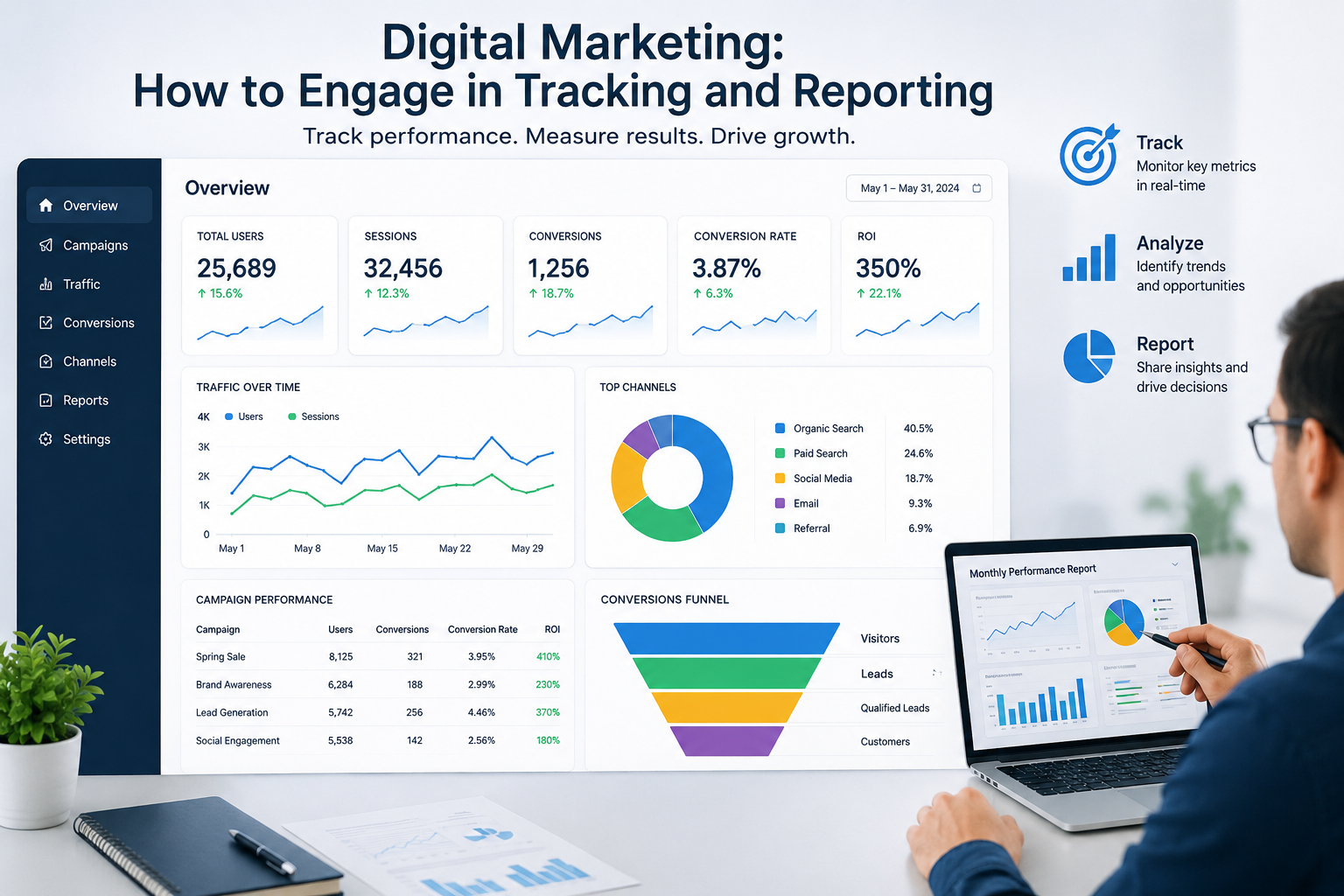
Digital Marketing: How to Engage in Tracking and Reporting
Digital marketing is essential to promote a business; it involves using digital platforms, such as social media sites (like Instagram, Facebook, and YouTube), websites, and emails, to promote a business’s products or services, spread awareness, and connect with customers.
Tracking and reporting are both equally crucial for digital marketing. A digital marketer cannot perform digital marketing without proper data. Proper research is required before engaging in digital marketing, which is only possible with systematic tracking and reporting.
Tracking: Tracking means collecting raw data over a specific period of time and monitoring key metrics to evaluate performance, identify patterns, and make decisions. This is the first and foremost step in digital marketing.
Reporting: Reporting is the process of organising and presenting collected data in a proper form, making it practical and easily understandable for understanding various aspects of business performance. It involves creating summaries, dashboards, and visualisations.
Advantages of tracking and reporting for digital marketing
-
Measure performance: Tracking and reporting help measure campaign (a series of activities designed to achieve a specific goal) performance by comparing actual results with desired goals. This enables us to make decisions on changes to attract a larger number of viewers.
-
User Experience: Periodic tracking helps in knowing performance and the response of customers to various campaigns. This helps improve user experience by enhancing the quality of digital service and focusing on the areas where customers interact the most.
-
Return on Investment (ROI): Return on Investment means understanding the profits from an investment and comparing these net profits with the cost of the investment. Tracking helps in measuring these profits. This helps in optimising future investments by focusing on activities and campaigns that are more profitable.
-
Enhances accountability: Tracking and reporting provide valuable and transparent insights into the performance of a campaign. This ensures that individuals and teams focus on achieving desired goals; otherwise, they will be accountable for not performing correctly.
-
Target audience: Tracking and reporting provide insights into customer response to various campaigns. This helps in understanding the target audience engaging with such campaigns, thus enabling the customisation of these campaigns to attract more and more customers.
Why Tracking is Important
Tracking is one of the most important parts of digital marketing because it helps businesses make informed decisions.
Understanding Customer Behaviour
Tracking helps businesses understand how customers interact with websites, ads, and social media content.
Businesses can identify:
- Which pages users visit most
- How much time users spend on a website
- Which products customers prefer
- What type of content receives more engagement
This information helps improve user experience.
Measuring Campaign Performance
Tracking helps businesses determine whether a campaign is successful or not.
For example, businesses can measure:
- Number of clicks
- Number of leads generated
- Sales conversions
- Ad impressions
- Cost per click
These metrics help marketers optimize campaigns.
Improving Marketing Strategies
When businesses understand which strategies work best, they can focus more on successful campaigns and avoid wasting resources on ineffective methods.
Increasing ROI
Return on Investment (ROI) is one of the most important goals of digital marketing.
Tracking helps businesses calculate:
- Marketing costs
- Revenue generated
- Campaign profitability
This helps improve future investments.
What is Reporting in Digital Marketing?
Reporting is the process of organizing collected data into reports, summaries, dashboards, and charts. Reports help businesses understand campaign performance in a simple and structured way.
Digital marketing reports may include:
- Website traffic reports
- SEO reports
- Social media reports
- Google Ads reports
- Conversion reports
- Email marketing reports
Reports make it easier for businesses to evaluate growth and improve decision-making.
Major Digital Marketing Metrics to Track
Businesses should monitor several important metrics to understand marketing performance.
Website Traffic
Website traffic shows how many users visit a website.
Traffic can come from:
- Search engines
- Social media
- Paid advertisements
- Email campaigns
- Direct visits
Bounce Rate
Bounce rate measures how many users leave a website without interacting further.
A high bounce rate may indicate:
- Poor website design
- Slow loading speed
- Irrelevant content
- Bad user experience
Conversion Rate
Conversion rate measures the percentage of visitors who complete desired actions.
Examples include:
- Filling contact forms
- Making purchases
- Signing up for newsletters
- Downloading files
Click-Through Rate (CTR)
CTR measures how many people click on ads or links.
Higher CTR usually indicates better ad performance.
Cost Per Click (CPC)
CPC measures how much businesses pay for each click on paid advertisements.
Return on Investment (ROI)
ROI helps businesses measure campaign profitability.
A positive ROI means campaigns are generating profits.
Digital marketing without any research:
- Poor engagement: Digital marketing without proper tracking and research is a waste of time because the content you post is not tailored to customer preferences and interests, leading to poor or no engagement.
- Waste budget: Investing in a campaign would be a waste, as there will be no profits due to poor engagement, resulting in a wasted budget.
- Failure in achieving desired goals: Without proper tracking and reporting, we cannot determine performance, which leads to missed objectives.
- No growth in business: Due to poor engagement and failure to achieve desired goals, the company cannot grow, resulting in stagnation.
FAQ Section
What is tracking in digital marketing?
Tracking in digital marketing means monitoring the performance of online campaigns. It helps businesses understand how customers interact with their website, ads, and social media content.
Why is reporting important for digital marketing?
Reporting helps organise marketing data in a simple and understandable way. It allows businesses to measure campaign success and make better marketing decisions.
Which tools are used for digital marketing tracking?
Popular tools used for tracking include Google Analytics, Google Search Console, Meta Business Suite, SEMrush, and Ahrefs.
How does tracking help improve business growth?
Tracking provides insights into customer behaviour and campaign performance. Businesses can use this information to improve marketing strategies and attract more customers.
What happens if a business does digital marketing without tracking?
Without tracking and reporting, businesses may waste their marketing budget, fail to understand customer needs, and struggle to achieve growth.
How can digital marketing improve customer engagement?
Digital marketing helps businesses connect with their target audience through SEO, social media, email marketing, and paid advertising, leading to better engagement and higher conversions.
Why is ROI important in digital marketing?
ROI helps businesses measure the profit generated from marketing campaigns. It allows companies to invest more in strategies that deliver better results.
How often should digital marketing reports be reviewed?
Businesses should review marketing reports regularly, preferably weekly or monthly, to track performance and improve future campaign
Posted on May 7, 2026 by Aarti Batra
Digro Technologies
 (123) 334 456 7890
 our blog

 Digro Admin
 July 18, 2026