

 June 15, 2026
What Are Backlinks and How Do They Work?
If you've spent any amount of time researching search engine optimization, you've almost certainly come across the term "backlinks." They're frequently described as one of the most powerful ranking factors in SEO, and entire industries have been built around acquiring them. But despite how often the term comes up, many website owners, bloggers, and even marketers don't fully understand what backlinks actually are, why they matter, or how they influence search rankings behind the scenes.
This guide takes a deep dive into backlinks from the ground up. We'll cover what they are, how search engines use them, the different types you'll encounter, what separates a valuable backlink from a worthless one, and practical strategies for building a healthy backlink profile without running into penalties. By the end, you should have a solid foundational understanding of one of SEO's most talked-about concepts.
What Is a Backlink?
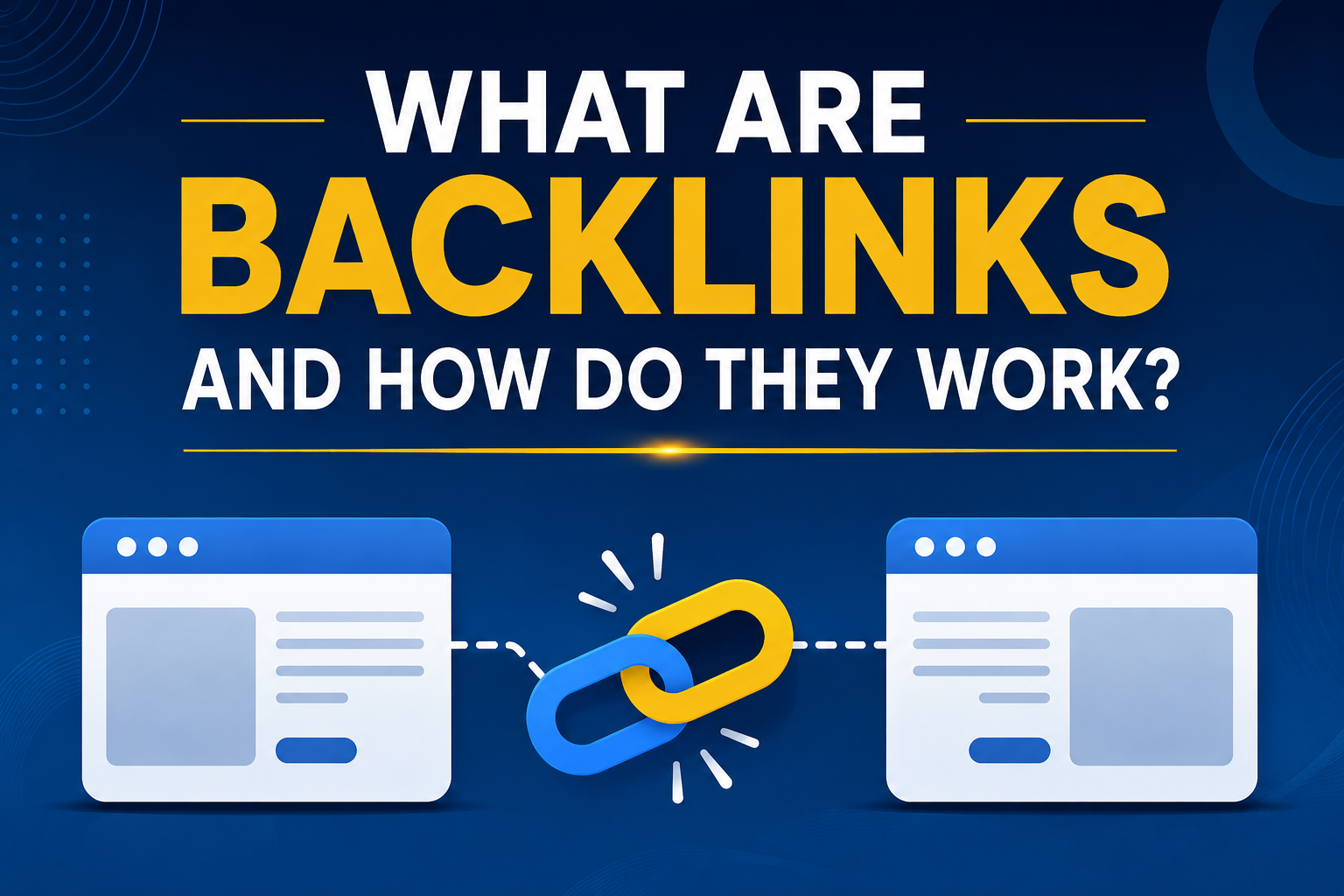
At its core, a backlink is simply a hyperlink from one website that points to a page on a different website. If Website A contains a link that leads to Website B, then Website B has received a backlink from Website A. Backlinks are also commonly referred to as "inbound links" or "incoming links," and the process of acquiring them is often called "link building."
Think of backlinks as a digital form of word-of-mouth. When someone mentions your business to a friend because they had a great experience, that's a form of endorsement. A backlink works similarly: when a website links to your content, it's signaling to its own audience, and to search engines, that your content is worth visiting.
Why Search Engines Care About Backlinks
Search engines like Google were originally built around the idea that links between websites could be used as a measure of importance and trust. The reasoning is straightforward: if many reputable websites link to a particular page, that page is probably valuable, accurate, or authoritative on its subject. If very few or no websites link to a page, it might be less trustworthy, less useful, or simply unknown.
This concept dates back to the earliest days of Google's search algorithm, which used a system that evaluated the quantity and quality of links pointing to a page to help determine how it should rank. While search algorithms have evolved dramatically since then and now consider hundreds of additional factors, backlinks remain one of the central pillars of how search engines assess a website's authority and trustworthiness.
Backlinks as a Trust Signal
It helps to think of backlinks as votes of confidence. Each backlink is essentially another website saying, "this content is worth referencing." However, not all votes carry the same weight. A link from a globally recognized news outlet or an established educational institution carries far more influence than a link from a brand-new, low-traffic blog. This is an important distinction we'll explore in more depth later in this guide.
How Do Backlinks Work?
To understand how backlinks function, it helps to picture the internet as a massive interconnected web of pages, all linked together in various ways. Search engines deploy automated programs, often called "crawlers" or "spiders," that continuously browse the web, following links from page to page and cataloging the content they find. This process is how search engines discover new pages and understand the relationships between different websites.
When a crawler encounters a link from Page A to Page B, it records that connection. Over time, search engines build an enormous map of how pages across the internet are interconnected. This map becomes part of the data used to calculate how trustworthy, relevant, and authoritative each page is.
The Concept of Link Equity
One of the most important ideas to understand when it comes to backlinks is "link equity," sometimes referred to as "link juice." Link equity refers to the value or authority that gets passed from one webpage to another through a hyperlink.
When a high-authority website links to your page, it passes along a portion of its own authority to your page. This transferred authority can help your page rank better in search results. However, link equity isn't an unlimited resource. A single webpage that links out to dozens of other websites will distribute its authority among all of those links, meaning each individual link receives a smaller share.
Several factors influence how much link equity is passed through a particular backlink:
The authority and trustworthiness of the linking website
How relevant the linking page's content is to your own content
The position of the link within the page (links within the main body of content tend to carry more weight than links in footers or sidebars)
Whether the link is a "dofollow" or "nofollow" link, which we'll discuss shortly
The number of other outbound links present on the same page
How Search Engines Evaluate Backlinks
Modern search engines don't simply count the number of backlinks a website has and rank it accordingly. If that were the case, link building would be a simple numbers game, and the internet would likely be flooded with even more spam than it already is.
Instead, search engines use sophisticated algorithms to evaluate the quality, context, and naturalness of each backlink. Some of the key considerations include:
Domain authority: How trustworthy and established is the website providing the link?
Relevance: Does the content on the linking page relate to the topic of the page being linked to?
Anchor text: What is the clickable text used for the link, and does it accurately describe the destination page?
Link placement: Is the link embedded naturally within helpful content, or does it appear to be stuffed into an unrelated page purely for SEO purposes?
Link velocity: How quickly is a website acquiring new backlinks? A sudden, unnatural spike in backlinks can raise red flags.
Crawling, Indexing, and Ranking
It's worth briefly touching on how backlinks fit into the broader process of how search engines work. There are generally three stages involved:
Crawling – Search engine bots discover pages by following links from already-known pages.
Indexing – Once a page is crawled, its content is analyzed and stored in the search engine's index, a massive database of webpages.
Ranking – When a user performs a search, the search engine retrieves relevant pages from its index and ranks them based on hundreds of factors, including backlinks, content quality, and user experience signals.
Backlinks play a role in all three stages. They help search engines discover new pages, contribute to how those pages are evaluated during indexing, and influence the final ranking position when a relevant search is performed.
Types of Backlinks
Not all backlinks are created equal, and understanding the different categories can help you develop a more effective and sustainable link-building strategy.
Natural (Editorial) Backlinks
Natural backlinks, sometimes called editorial backlinks, are links that other websites create on their own, without any request or incentive from the website being linked to. These typically happen because the linking website's author found your content valuable enough to reference.
For example, if a journalist writing an article about industry trends comes across a piece of original research on your website and links to it as a source, that's a natural backlink. These types of links are generally considered the most valuable because they represent a genuine endorsement of your content's quality and usefulness.
Manual (Outreach) Backlinks
Manual backlinks, also known as outreach backlinks, are acquired through deliberate effort. This might involve reaching out to website owners, bloggers, journalists, or industry influencers and asking them to link to your content, often in exchange for something of value such as a guest post, an expert quote, or simply because the content genuinely fits their audience.
Outreach link building is one of the most common strategies used by SEO professionals because it allows for more control over which websites link back to you, while still resulting in links that can appear natural if done correctly.
Self-Created Backlinks
Self-created backlinks are links that a website owner places themselves, often on platforms that allow user-generated content. Examples include:
Blog comment sections
Online forums and discussion boards
Web directories
Social media profiles
Press release distribution sites
While not inherently harmful in small amounts, search engines tend to assign minimal value to self-created backlinks because they're easy to generate in bulk and don't represent genuine third-party endorsement. Overusing this tactic, especially with repetitive or irrelevant links, can sometimes trigger spam-related penalties.
Dofollow vs. Nofollow Links
When discussing backlinks, it's essential to understand the difference between dofollow and nofollow links, as this distinction significantly impacts how a link is treated by search engines.
Dofollow Links
A dofollow link is the default type of hyperlink. Unless specifically marked otherwise, links are treated as dofollow by search engines, meaning they pass link equity from the linking page to the destination page. These are the links that have the most direct impact on SEO rankings.
Nofollow Links
A nofollow link includes a special HTML attribute that tells search engines not to pass authority through that link. Website owners often use nofollow tags for links in comment sections, sponsored content, advertisements, or other situations where they don't want to vouch for the destination page.
While nofollow links don't directly contribute to link equity in the traditional sense, they can still drive referral traffic, increase brand visibility, and contribute to a natural-looking link profile. Some evidence suggests that search engines may still consider nofollow links as part of their broader evaluation, even if they don't pass authority in the same way dofollow links do.
Other Link Attributes
In addition to dofollow and nofollow, there are a couple of other link attributes worth knowing:
Sponsored: Used to indicate that a link is part of a paid placement, advertisement, or sponsorship arrangement.
UGC (User Generated Content): Used for links found within user-generated content, such as comments or forum posts, to help search engines distinguish them from editorial links.
What Makes a Backlink High Quality?
Given that not all backlinks carry the same weight, it's important to understand what separates a high-quality backlink from a low-quality or even harmful one.
Relevance to Your Industry or Topic
A backlink from a website that operates within the same or a closely related industry as yours tends to carry more value than a link from a completely unrelated site. For example, if you run a fitness equipment website, a backlink from a health and wellness blog is far more meaningful than a backlink from a website about car repair, even if the car repair site has a high overall authority score.
Relevance signals to search engines that the link makes sense within the broader context of the content, rather than appearing forced or artificially placed.
Domain Authority and Trustworthiness
Websites that have been around for a long time, consistently produce high-quality content, and have earned their own strong backlink profiles tend to pass along more value through their links. Links from government websites, educational institutions, established news organizations, and well-known industry publications are generally considered highly valuable.
Placement Within the Content
Where a link appears on a page can significantly impact its value. A link that's naturally embedded within the main body of an article, surrounded by relevant text, is generally seen as more valuable than a link placed in:
A website's footer
A sidebar widget
An "additional resources" list at the very bottom of a page with no contextual connection
Contextual Links vs. Non-Contextual Links
A contextual link is one that's placed within content where it makes logical sense, helping readers find additional information related to what they're currently reading. Non-contextual links, on the other hand, often appear disconnected from the surrounding content and are more likely to be viewed with suspicion by search engines.
Anchor Text Quality
Anchor text is the visible, clickable text of a hyperlink. The words used in anchor text can provide search engines with additional context about the linked page's content. Natural anchor text tends to vary and often includes branded terms, generic phrases like "click here" or "learn more," or partial matches to the linked page's topic, rather than the exact same keyword phrase repeated across every single backlink.
Traffic and Engagement of the Linking Site
A backlink from a website that receives genuine organic traffic and has engaged visitors tends to be more valuable than a link from a site with little to no real audience. This is partly because such links are more likely to drive actual referral traffic, and partly because they're a better indicator that the linking website itself is considered valuable by search engines and users alike.
How to Build Backlinks
Building a strong backlink profile takes time, strategy, and consistent effort. There's no shortcut that produces lasting results without risk, but there are several proven, sustainable approaches.
Create Genuinely Valuable, Link-Worthy Content
The foundation of any successful link-building strategy is content that people actually want to reference. This might include:
Original research, surveys, or industry studies
Comprehensive, in-depth guides on topics that lack quality coverage elsewhere
Free tools, calculators, or templates that solve a specific problem
Infographics or visual content that simplifies complex information
Case studies that demonstrate real results
When your content provides genuine value, other website owners and content creators are more likely to link to it naturally as a resource for their own audiences.
Guest Blogging
Guest blogging involves writing articles for other websites within your industry, often in exchange for the opportunity to include a backlink to your own site, either within the body of the article or in an author bio. Beyond the SEO benefits, guest blogging can also help establish your expertise, build relationships with other industry professionals, and expose your brand to a new audience.
When pursuing guest blogging opportunities, it's important to focus on websites that are relevant to your niche and have genuine audiences, rather than low-quality sites that exist solely to publish guest content for link-building purposes.
Digital PR and Outreach
Digital PR involves creating newsworthy content, such as original research, surveys, or unique data findings, and then promoting that content to journalists, bloggers, and other content creators who might find it relevant to their audience. When successful, this can result in high-authority backlinks from major publications.
Broken Link Building
Broken link building involves finding pages on other websites that contain links to content that no longer exists (resulting in a "404 error"), and then reaching out to the website owner to suggest replacing that broken link with a link to a relevant, similar piece of content on your own site. This approach provides genuine value to the website owner by helping them fix an issue on their site, while also earning you a backlink.
Building Genuine Relationships
Many of the most valuable backlinks come not from cold outreach, but from genuine relationships built over time within an industry. Engaging with other content creators, participating in industry communities, collaborating on projects, and simply being a recognizable, helpful presence within your niche can naturally lead to link-building opportunities that arise organically.
Resource Page Link Building
Many websites maintain "resource pages" that curate helpful links on a particular topic for their audience. If you have content that fits well within an existing resource page, reaching out to suggest its inclusion can be an effective way to earn a relevant backlink.
Unlinked Brand Mentions
Sometimes, other websites mention your brand, product, or content without including a link back to your site. Identifying these unlinked mentions and reaching out to politely request that they be converted into proper links can be a relatively easy way to gain additional backlinks, since the website has already chosen to reference you.
Common Backlink Mistakes to Avoid
While building backlinks is important, certain practices can do more harm than good, sometimes resulting in penalties that significantly damage a website's search visibility.
Buying Links
Purchasing backlinks, whether through direct payment, link exchange schemes, or paid link networks, violates the guidelines of major search engines. While it might be tempting because it can produce faster results, websites caught engaging in this practice risk severe ranking penalties or even removal from search results entirely.
Participating in Link Farms or Link Schemes
Link farms are networks of websites created solely for the purpose of linking to each other in an attempt to manipulate search rankings. These schemes are typically easy for search engines to detect due to their unnatural patterns, and participation can result in significant penalties.
Over-Optimized Anchor Text
Using the exact same keyword-rich anchor text across a large number of backlinks can appear unnatural and may be flagged as a manipulation attempt. A healthy backlink profile typically includes a diverse mix of anchor text types, including branded terms, generic phrases, and natural variations.
Ignoring Relevance
Acquiring backlinks purely based on a website's authority score, without considering whether the content is actually relevant to your niche, can result in a backlink profile that looks unnatural and provides limited SEO benefit.
Neglecting to Monitor Your Backlink Profile
Websites should periodically review their backlink profiles to identify any toxic or spammy links that may have been acquired without their knowledge, sometimes through negative SEO attacks from competitors. In cases where harmful backlinks are identified, website owners may need to take action to address them.
How to Monitor and Maintain Your Backlink Profile
Building backlinks isn't a one-time task; it requires ongoing monitoring and maintenance to ensure your backlink profile remains healthy over time.
Regularly Auditing Your Backlinks
Conducting periodic backlink audits allows you to identify which websites are linking to you, assess the quality and relevance of those links, and spot any potentially harmful patterns early on.
Tracking Lost Backlinks
Websites occasionally remove content, restructure their pages, or go offline entirely, which can result in previously earned backlinks disappearing. Tracking lost backlinks allows you to potentially reach out and request that the link be restored or replaced.
Identifying and Addressing Toxic Links
If your backlink profile includes links from spammy, low-quality, or irrelevant websites, particularly if they appeared suddenly and in large volumes, it may indicate a negative SEO attack or the unintended consequences of a previous link-building campaign. Addressing these links, when necessary, can help protect your website's overall search visibility.
Final Thoughts
Backlinks remain one of the foundational elements of search engine optimization because, at their core, they represent something search engines value deeply: trust expressed by one website toward another. A strong, natural backlink profile signals to search engines that your content is credible, useful, and worth surfacing to users who are searching for relevant information.
However, the world of backlinks has also evolved significantly. Search engines have become increasingly sophisticated at distinguishing between genuine endorsements and artificial attempts at manipulation. This means that sustainable, long-term success with backlinks comes not from chasing shortcuts, but from consistently creating valuable content, building genuine relationships within your industry, and earning links the way they were originally intended to be earned: because other people genuinely believe your content is worth sharing.
Whether you're just starting to think about link building or looking to refine an existing strategy, focusing on quality, relevance, and authenticity will serve you far better in the long run than any quick fix ever could.
Frequently Asked Questions (FAQs) About Backlinks
1. What are backlinks in SEO?
Backlinks are links from one website to another. When a website links to your page, it creates a backlink. These links help search engines understand the credibility, authority, and relevance of your website.
2. Why are backlinks important for SEO?
Backlinks are important because they act as votes of confidence from other websites. High-quality backlinks can improve your search engine rankings, increase website authority, and drive more organic traffic.
3. How do backlinks help improve Google rankings?
Google uses backlinks as a ranking factor. When reputable websites link to your content, search engines view your website as more trustworthy and valuable, which can help improve your rankings in search results.
4. What is the difference between dofollow and nofollow backlinks?
Dofollow backlinks pass SEO value (link equity) to the linked website and can directly impact rankings. Nofollow backlinks do not pass link equity but can still generate traffic and increase brand visibility.
5. What makes a backlink high quality?
A high-quality backlink comes from a relevant, authoritative, and trustworthy website. Links placed naturally within content and from websites related to your industry typically provide the most SEO value.
6. How can I get backlinks for my website?
You can earn backlinks by creating valuable content, guest blogging, digital PR campaigns, outreach, broken link building, resource page submissions, and building relationships within your industry.
7. Are all backlinks beneficial for SEO?
No. While quality backlinks can improve rankings, spammy, irrelevant, or low-quality backlinks can harm your website's SEO performance and may even lead to search engine penalties.
8. Can buying backlinks improve rankings?
Buying backlinks violates Google's guidelines and can result in penalties. It is always better to focus on earning natural, high-quality backlinks through ethical SEO practices.
9. How many backlinks do I need to rank higher?
There is no fixed number. The quality, relevance, and authority of backlinks matter more than quantity. A few high-quality backlinks can be more valuable than hundreds of low-quality ones.
10. How can I check my website's backlinks?
You can monitor backlinks using SEO tools such as Google Search Console, Aherfs, SEMrush, and Moz. These tools help you analyze backlink quality, authority, and overall link profile health.
 (123) 334 456 7890
 our blog

 Digro Admin
 July 18, 2026